
For decades, the American automotive market offered a kaleidoscope of car interiors. In the 1970s and 80s, you could walk into a dealership and drive away in a sedan with a deep burgundy velour seat, a forest green dashboard, or even a metallic-flake blue vinyl bench. Today, you may feel like those choices have largely evaporated, replaced by a sea of “Ebony,” “Slate,” and “Ash,” all seemingly interchangeable, dressed-up names for black and gray.
You’re not imagining things—car interiors and their color and finish selections have become significantly more limited over the past 20 years. While the mid-20th century offered a “living room” variety of vibrant blues, reds, greens, and even patterned brocades, combined with plush carpets, opulent genuine leather, and even wood grain, modern car interiors have largely converged on a “grayscale” palette of synthetic leather, plastic, and fabric.
In this post, we’ll explore the factors that are the primary causes for this industry-wide shift toward standardization, why synthetic leather is actually more practical and can offer more color options, and help you find car interiors from our selection at H+H that stand out amongst the rest, with rare colors and unique finishes.

The Hidden Costs of Color Variety
The primary reason for the decline of unique car interiors is the sheer complexity of modern manufacturing. According to reports, the number of individual components inside a car has grown exponentially over the last twenty years.
A ’90s dashboard was a relatively simple assembly of plastic and foam, with relatively simple electronics. In 2025 car interiors, the dashboard contains wiring harnesses, haptic feedback sensors, airbag modules, ambient lighting strips, and integrated touchscreen mounts.
Each time a manufacturer offers a new interior color, they must create a unique part number for every single one of those components. If a brand offers five interior colors, they need five different versions of the door cards, five versions of the center console cubby, five versions of the seat covers, and many more variations of other parts, depending on how much coverage each color option gets.
This creates a massive logistical burden. By sticking to black or gray car interiors, manufacturers can streamline their supply chains and keep production costs down, which helps keep the final sticker price more manageable for shoppers, but can result in a rather limited selection.

The Influence of Digital Displays and “Piano Black”
The rise of the “digital cockpit” has also played a role in taming interior aesthetics. As screens have grown larger, car interiors have had to adapt. Many modern vehicles use high-gloss “Piano Black” plastic to create a seamless visual transition between the infotainment screen and the rest of the dashboard.
Car interiors have trended toward glossy black surfaces to mimic the look of high-end consumer electronics like smartphones and tablets. While piano black looks sleek in a darkened showroom, when used in abundance it naturally pushes the rest of the interior towards a monochrome design. It is much easier to make a 12-inch screen look integrated if the rest of the dash is gloss black, rather than trying to pair a black rectangle with a brightly colored or decoratively textured dashboard.

Chevy’s “ACTIV” Trim and Bold Interior Accents
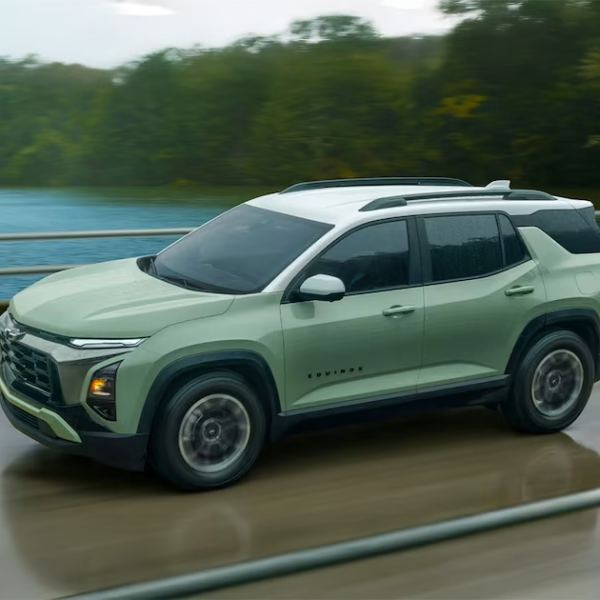
Chevrolet is making a play for buyers who want their daily commute through Omaha to feel a bit more vibrant. The Chevy Trax and Trailblazer, particularly in the ACTIV trim, both serve as standout examples of how to use unique car interior colors and accents to target a design-conscious audience.
The new Chevy Trax ACTIV incorporates “Artemis” yellow accents throughout the cabin. You will find yellow contrast stitching and piping on the seats and dashboard, along with color-coordinated trim pieces that break up the traditional black plastics. This “pop” of color gives the vehicle a sporty, energetic feel that is missing from many of its competitors in the compact SUV segment.


At H+H Chevy, we have seen that these small touches make a big difference for drivers shopping for car interiors that feel custom-tailored. The use of varied textures—like microfiber inserts and textured plastic “scales” on the dash—proves that you don’t need a six-figure budget to escape the beige. It is a perfect choice for those who want their vehicle to have a bit of personality without being overwhelming during long drives on I-80.

Kia’s Interior Design Evolution
Kia has become a leader in offering high-end looking car interiors that feel significantly more expensive than their price point suggests. While other brands have played it safe, the next-generation 2027 Kia Telluride—which is already on the lot and selling quickly at H+H Kia—proves that “neutral” doesn’t have to mean “boring.” Kia is leaning into a philosophy of “earth-tone luxury,” moving away from the stark, cold plastics of the past.
In the 2027 Telluride models we have already delivered to Omaha drivers, we are seeing sophisticated car interiors with colors like Terracotta Brown, Sage Green, and Navy Blue. These high-end shades provide a combination of refinement, uniqueness, and character. Kia’s recent interior material choices consistently punch above their weight class, often rivaling luxury European brands in terms of color depth and tactile quality.


The X-Line and X-Pro trims at H+H Kia often feature embossed seat patterns and dark wood or carbon fiber interior trim that elevate the cabin’s feel. By using deep greens (like Black Jade) and rich clay tones, Kia manages to offer a genuine alternative to the “grayscale” norm while maintaining a look that feels timeless. If you want a three-row SUV that feels like a boutique hotel inside, the 2027 Telluride is currently the benchmark for the industry.

The Jeep Tradition of Rugged Expression
If you visit H+H Jeep Dodge Ram, you will find another exception to the rule of boring cabins. Jeep has a long history of using color to lean into its “outdoor lifestyle” branding. In models like the Wrangler and the Gladiator, it is not uncommon to find bold red dashboard panels or “Heritage Tan” cloth seats designed to withstand the elements while looking great.
The new Jeep Grand Wagoneer takes things even further into the luxury space. These vehicles offer unique car interiors with features such as “Tupelo” honey-colored leathers and deep “Agave Blue” interiors that feel like a high-end lounge rather than a standard SUV.


The use of real wood accents and multi-tonal leather palettes in the Wagoneer line is part of a broader strategy to compete with European luxury brands that have traditionally offered more customization. For an Omaha driver who wants the ultimate in cabin comfort and style, the Wagoneer remains a benchmark.

Modern Muscle Interiors from Dodge
When it comes to high-impact design, Dodge remains one of the few brands willing to take major risks. With the arrival of the all-new Dodge Charger, available in both the Daytona EV and the gas-powered Sixpack variants, the brand is doubling down on visceral, driver-centric unique car interior colors.
The new Charger features a cabin that feels heavily influenced by modern enthusiast culture. This includes the availability of “Demonic Red” Nappa leather, which provides a stunning visual contrast to the dark, tech-forward dashboard. Dodge has also implemented “Attitude Adjustment” lighting with 64 different color options that wrap around the cockpit, allowing Omaha drivers to change the entire mood of the interior at the touch of a button.


For those who want their vehicle to feel as aggressive on the inside as it looks on the outside, a new Charger at H+H Jeep Dodge Ram is a top contender.

Chrysler: Refined Luxury in the New Pacifica
Chrysler is also proving that “family vehicle” doesn’t have to mean a boring interior. The refreshed Chrysler Pacifica has moved the goalposts for minivan luxury by offering materials typically reserved for high-end European sedans. One of the most sought-after unique car interior colors in the Pacifica lineup is the Blue Agave Nappa leather.
As noted by Car and Driver, this deep, teal-adjacent shade is paired with light-colored piping and “S” branding, creating a serene, high-end environment that stands out from the typical tan or gray interiors found in other family haulers. When you combine this color palette with the Pacifica’s wood-style accents and premium stitch patterns, it transforms the school run through West Omaha into a much more refined experience.


The Pacifica remains a primary choice for parents who refuse to settle for a generic cabin, and we’ve got the redesigned 2027 Chrysler Pacifica at H+H Jeep Dodge Ram.
Frequently Asked Questions (FAQs) About New Car Interior Options at H+H
1. Why is “Piano Black” trim so common if it shows fingerprints and scratches so easily?
Manufacturers use it because it is an inexpensive way to make plastic in car interiors look like high-end lacquer or glass. It also helps integrate digital screens into the dashboard design seamlessly.
2. Do light-colored interiors stay cooler in the Nebraska summer?
Light-colored car interiors (like tan or light gray) stay significantly cooler than black interiors when parked in the sun. If you spend a lot of time driving in Omaha during July and August, a lighter interior can improve your comfort.
3. Are “SynTex” or “Vegan Leather” interiors available in different colors?
Yes. Modern synthetic leathers are much easier to dye than traditional cowhide. This is why brands like Kia can offer unique car interior colors like Sage” or Navy in their SUV lineups while remaining more durable than traditional fabric.
4. Do unique car interiors hurt trade-in value?
Generally, as long as the color is a factory option and is well-maintained, it won’t significantly hurt your value at an H+H dealership. The Omaha market appreciates well-maintained, high-trim vehicles with desirable factory options.
Find Unique Car Interiors at H+H
Finding a vehicle that breaks the mold requires a strategy. Because the H+H family of dealerships spans several major brands—including Chevrolet, Kia, and Jeep Dodge Ram—Omaha shoppers have a unique advantage. You are not limited to the inventory of a single manufacturer; you can cross-shop different design philosophies within a few miles of each other.
If you are looking for unique car interiors, your best bet is to explore our new inventory for specific trims. Manufacturers often reserve their most creative palettes for certain models to keep trims distinct and limit variety in their manufacturing process, favoring efficiency.
Be sure to check out our pre-owned selection, too. The used car market in Omaha yields plenty of options from any brand in the US, and H+H has hundreds of quality used cars in stock at any given time—you’re sure to find something that piques your interest.

HHKIA.COM
Explore the 2027 Kia Telluride at H+H.